Monday, March 9, 2026
Home Blog

Three Dungeons and Dragons Podcasts to listen to before you die

0

Not everyone has skydiving, rocket sledding or cruel cow tipping on their bucket list. Others would prefer to hear the stories of interesting people before they commence their journey to the afterlife. If that sounds like you and you want to fill your daily commute with interesting here are the podcasts to load up on.

1. Chris Perkins and Tracy Hickman on Curse of Strahd

This Official Dragon Talk episode provides the ultimate backstory to the most popular 5th edition adventure Curse of Strahd. Tracey Hickman discusses the gensis of the adventures creation and he discusses the personality and mindset behind Strahd and the true vilian a vampire is meant to represent.


Curse of Strahd on Dragontalk

2. Chris Perkins (Between the Sheets)

Christopher Perkins current 5e adventure path designer and creator at Wizards of the Coast and former Editor of Dungeon Magazine sits down with Brian W. Foster to discuss his childhood, pathway into Dungeons and Dragons, his hopes for the future of the game and what he plans to do when he eventually decides to retire.

3. Episode 30 Medieval Podcast by Web DM

This episode is locked behind a Patreon paywall but its definatley worth shelling out $5 for a month to listen to this and the other podcast episodes Web DM has.

Jim Davis (who has completed post graduate studies in medieval history – specialising in mounted horse combat) talks about how Dungeons and Dragons is not representative of the medieval world.

Web DM Patron: https://www.patreon.com/webdm


Review: Dungeons & Dragons – The Chapel on the Cliffs

0

It’s been fifty years since the curse struck Kennmouth. Since then, few have dared brave the dangers of the abandoned village, but even fewer came back in one piece. Will you be the heroes who finally rid Kennmouth of its denizens?

The Chapel on the Cliffs by Goblin Stone is a lightly themed horror adventure or a group of 4-5 characters of 3rd level and will provide 6 and 10 hours of entertaining gameplay.

This thirty-five page adventure is outstanding. The adventure is clear in what is sets out to do and players will have no ambiguity as to what they can do – but neither is it forceful in the way it presents this. Those looking to produce their own 5e content are recommended to read this product to learn how to present an adventure to a modern mainstream audience.

What makes the adventure unique (provided the PCs don’t die – a real possibility) is there are a number of ways for players to both approach and conclude the adventure. The potential to have the adventure to end in multiple ways is important as is trains the Dungeon Masters to understand the joy of having an adventure not going quite the way they planned – and happiness this creates.

In my own running of the game the player characters were almost killed outright twice before defeating the horror within. The first time they were saved by the light cleric channel divinity special ability, and the second by the fighter making a reckless gambit. It is rare for an adventure to create moments of extreme tension followed by either finality through death or sweet survival.

As Kennmouth village is presented as a small sandbox a Dungeon Master can quickly and easily drop their own creative ideas to extend or modify the adventure.

The adventure’s appendix also includes useful information to assist with the running of Sieges and Chases both of which are possibilities.

Layout, artwork and cartography is first class and a benchmark as to what a premium adventure product is. If you intend to be putting product on Kickstarter this adventure sets of the benchmark against which other adventures should be compared.

Virtual Table Top players are supported with a separate pack of VTT suitable tokens and maps.

Rules support is provided for scaling the adventure from Average Party Level 2 to 6.

Originally sold as a Kickstarter Project the adventure is now available in Print and Electronic Format on DrivThruRPG should you wish to purchase a copy.

Fantasy Grounds VTT becomes free

0

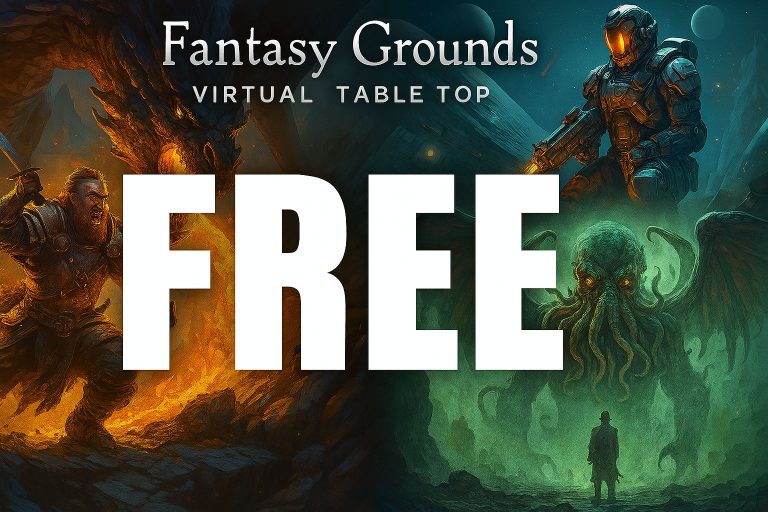
Smiteworks LLC today (9th November 2025) announced that its virtual tabletop Fantasy Grounds is now free to use and without paywalls.

In a company run livestream Smiteworks announced that it had noticed continuing reviews which highlighted how good and powerful the software is but then referred people to start with a free competitor with whom they then stuck. As a company they decided it was time to rectify this and will move to a model solely reliant upon people purchasing books and manuals from their store.

The live stream noted that their customer based was extremely loyal and they hoped that by eliminating a financial barrier to entry more role-players would be attracted to their product.

For those not familiar with Fantasy Grounds VTT the software is designed to run on PC, Linux and Mac and provides VTT support to more game systems than any other VTT. This includes:

  • Classic & Popular RPGs
    • Dungeons & Dragons 5E, 4E, 3.5E
    • Pathfinder 1E & 2E
    • Call of Cthulhu (6th & 7th Editions)
    • Savage Worlds (including Adventure Edition)
    • Castles & Crusades
    • Rolemaster Classic & Rolemaster Fantasy Grounds
    • GURPS (Generic Universal RolePlaying System)
  • Sci-Fi & Modern Systems
    • d20 Modern
    • Starfinder
    • Traveller (Mongoose 2E)
    • Delta Green
    • Cyberpunk RED (via community or third-party modules)
  • Indie & Niche Systems
    • Ars Magica
    • Arcana Evolved
    • Iron Heroes
    • Shaintar
    • Barbarians of Lemuria
    • Mutants & Masterminds
    • FATE Core & Accelerated
    • Dungeon Crawl Classics
    • 13th Age
    • The Dark Eye
    • Numenera / Cypher System
    • MoreCore (a flexible community ruleset for unsupported systems)
  • Generic & Toolkit Systems
    • d20 (Generic)
    • d20_JPG (variant d20 ruleset)
    • CoreRPG (base framework used by many other rulesets)
    • MoreCore (community toolkit for custom systems)

A detailed review of Fantasy Grounds is available here

As part of the free component the Dungeons and Dragons SRD (Standard Rules Document) is provided at zero cost, its fully playable, and yes you can just obtain the software for free, then use the SRD and then create and import your own material. Obviously Smiteworks would appreciate you purchase some products from their store but if you live in a country where you cannot afford US pricing this announcement makes a powerful VTT gaming platform suddenly available to you.

Download it and enjoy.

For those interesting in learning more consider joining Fantasy Grounds Academy or watching their video tutorials on YouTube.

The Power of Massive Maps

0

There’s something irreplaceable about playing roleplaying games in person—the whispered strategies between players, the subtle glances, the shared tension across the table. That intimacy is hard to replicate. In these sessions most encounter maps are small locations, a room, a small cavern and sometimes an area as large as a hall.This is not by accident role playing games were created for an in person experience and designed to fit on a small dining table. Role playing games spun out of miniature war gaming which is a table centric hobby.

But there’s one area where a virtual tabletop offers a truly superior experience: the  massive map.

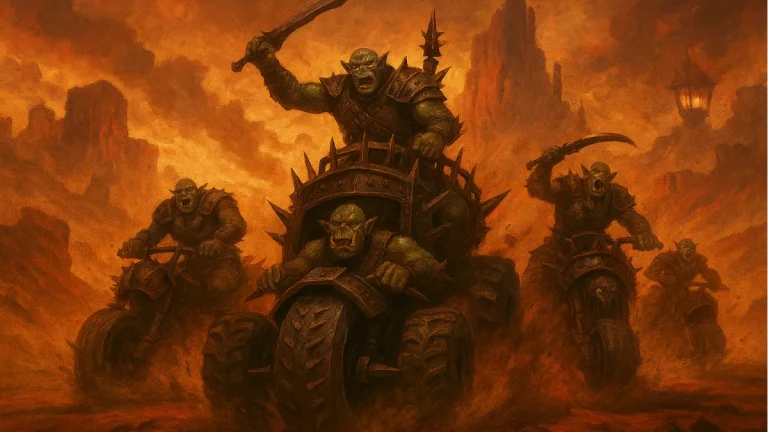
A massive map transforms the game options for encounters from a small static locations into a dynamic battlefield. Massive maps allows both the Game Master and players to use motion, distance, and scale to evoke a sense of space. Most published adventures for D&D 5e, are filled with compact maps. Take Descent into Avernus, which introduces the first layer of Hell—a scorched wasteland of rage and infernal machines. The book’s maps are functional, but none capture the sprawling chaos of war rigs tearing across the desert. Sure there is theater of the mind but not everyone wants that.

Virtual tabletops, unlock that scale. You can build sprawling maps of sand-blasted hell-scapes and then fill it with war machines, fortresses, and roaming monsters. Players can pilot vehicles across vast terrain, triggering encounters, ambushes, and environmental hazards. A sense of continual motion becomes central to the game play experience.

Imagine a scenario with six players, each controlling a vehicle or mount and another 6 controlled by desert orcs. Now after each creatures turn in combat all machines move 5 feet. Suddenly you are your players are orchestrating a ballet of movement—120 feet of war movement per round can mean tactical chaos. Within one combat round monsters and players can split up, regroup, flank, or collide. You’re not just placing tokens; you’re choreographing a cinematic chase.

This opens up thrilling possibilities:

  • Vehicles crashing into each other
  • Monsters being run down mid-combat
  • Players and Monsters leaping between machines
  • Environmental hazards forcing reroutes or breakdowns

The map becomes more than a backdrop—it’s a living, breathing part of the story. And with foretelling techniques layered in (ominous terrain, prophetic symbols, NPC warnings), and the use of line of sight blocking features so the characters don’t know what is around the next corner the map itself can whisper danger long before the dice roll.

Types of massive maps with dynamic combat potential

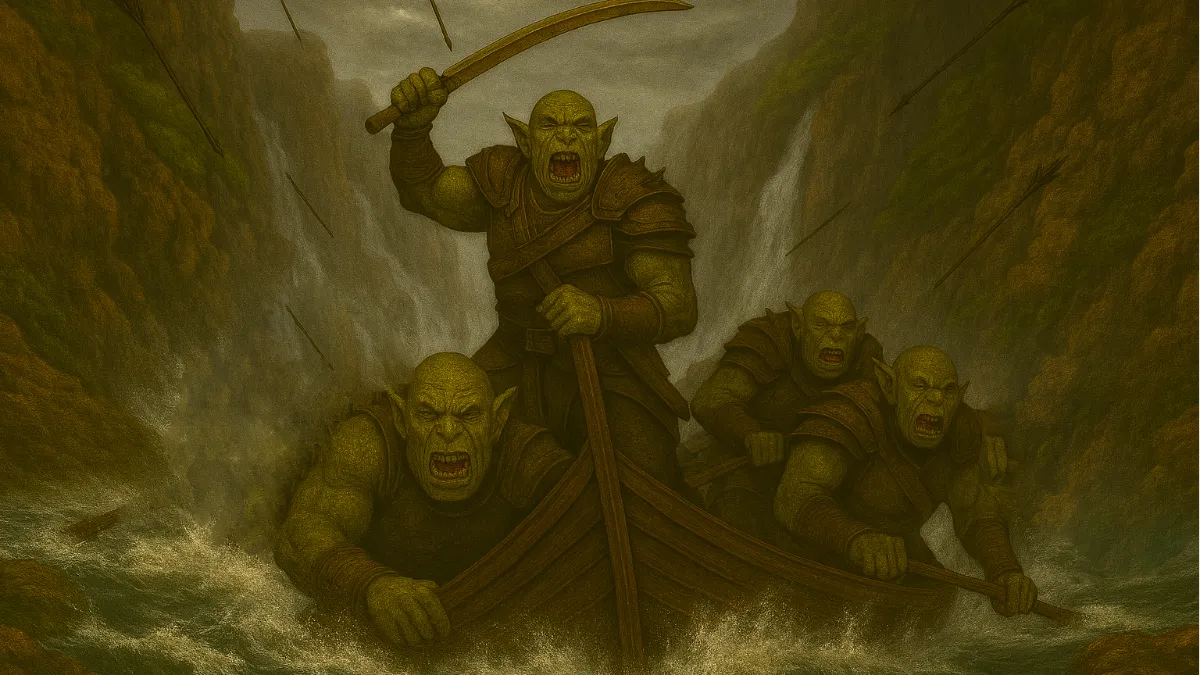
  • River Runs (on a raft in a ranging river)
  • Chase maps
  • Falls

Massive Maps turn static encounters into kinetic storytelling, and who knows what might be waiting for them around the next bend in the next round of combat.

The Creation of Suspense for your Players

0

In any role playing game what truly brings a campaign to life is that elusive spark of dread coupled with curiosity to investigate further — to do this your need to inject a sense of suspense foretelling. Foretelling is the art of hinting at what lies ahead, of building tension not with exposition, but with atmosphere and implication.

So what techniques are available for foretelling? What pathways and choices do game masters have to create that mental scene—a sense of expectation, of wanting to go somewhere while remaining cautious, even fearful about what might be found?

Symbolism and Inventory as Narrative Clues
One method is embedding symbolic elements into the players’ inventory or NPC interactions. Symbols—whether a torn page, a bloodstained map, or a goblin street urchin covered in cult tattoos screaming about “the blood moon that lies ahead” immediately before it collapses and dies. These all suggest that something vital is coming, or an option for exploration lies ahead. Even better provide seeds that provide the players with a couple of options (but never more than three) of where to proceed and a sense of worry (or wonder) about what they didn’t choose.

Symbols can be fragments, half-truths, or misunderstood omens. What you are trying to achieve is to make players feel that the world is whispering to them, and a sense they are and the world are both moving toward a fate unseen.

Environmental Foretelling: The World as a Warning
Another powerful technique is environmental foretelling—subtle shifts in the world that signal change. The water grows still. The temperature drops. Crickets fall silent. Cockroaches skitter unnaturally during a long rest. These are not random details; they are the breath of the world holding itself, waiting.

Be mindful that absence can also be a warning. A stillness in the air, the hush before a storm, or shadows lost in the midday sun — removal or loss can suggest that something or someone lies ahead.

Worshipers, and Obligations to Patrons

Don’t forget the power of ritual and connection. Fantasy game characters often draw their powers from gods or mysterious patrons. A cleric may receive a divine message warning of danger or a request to investigate from their deity whilst a warlock may receive encouragement to investigate, a promise of a reward of more power, or perhaps a threat of lost access to their patron’s favor by choosing to follow or not follow the patrons desire. Be mindful that role play connections direct to players characters can be seized but they should never over utilised, or abused as that may result in loss of Player agenc0y and willingness to play the game. Done with care and with respect to the Player these interactions can help make the characters world and faith or following feel alive, reactive, and prophetic.

Creating suspense is not about giving answers. It’s about creating questions that echo through the story. It’s the art of making players lean forward, eyes wide, wondering what comes next—and whether they’re ready for it.


So 5e 2024 D&D Orcs are now Nice?

0

The 50th anniversary year for Dungeons and Dragons was a terrible year to be a goblin.

It’s the year that Dungeons and Dragons 1st edition pig-nose orcs were promoted and elevated from being brooding villains prone to violence and believing in their superiority over other species to become peace loving beatniks only too happy to take their place among the cohorts of Player Characters races /species with the right to to beat the living snot out of goblins in the name of good.

How did this happen? How did the year that the game was supposed to celebrate the history of the game decided to turn its back on the history of the orc?

Lets start at the beginning.

According to the Oxford reference the word “orc” is recorded from the late 16th century, and might be based upon the latin word Orcus or Italian Orc demon of monster, or the Old English word Orcneas denoting monsters.

This use of the word in the context of monstrosity lasted centuries with J.R.R Tolkein using the name in his book for the horde villains of his stories. Ruthless and evil but not incapable of organisation – just organisational structures based on strength and the application of violence. The orc is a symbol of the worst of real-world humanity (a species capable of great things yet prone to falling to violence and a betrayal of accomplishment through peace, hope and love).

The orc is a symbol of the worst of real-world humanity (a species capable of great things yet prone to falling to violence and a betrayal of accomplishment through peace, hope and love).

This played out in the Advanced Dungeons and Dragons Monster Manual 1st Edition where orcs were typically found in tribes of 30 to 300 creatures but had average to low intelligence but not none. Orcs were capable of creating alliances and building kingdoms but the propensity for violence and cruelty were never far away. Reactionary violence tempered by boughts of pragmatism.

In 2nd edition, orcs remained aggressive and believed other species to be inferior to them and that bulling and slavery were part of the natural order. They would cooperate with others but eventually rebel against non-orc control. Orcs could form alliances and become trading parties (building civilizations) and have notionally peaceful societies but were quick to take offense and react with violence. Orcs were purists and considered orc children bred with other species (half-orcs as not trustworthy) leading to some half-orcs being left on their own or congregating with others similar to themselves.

In 3rd edition, orcs in the monster manual became more aggressive and introduced Gruumush a one-eyed god who tolerated no peace among his people. Think of a god who channels the beating drums of war into their children’s head. These societies were slightly less likely to build the orc civilization of 2nd edition and 1st. Notable is the Monster Manual does contain information that allows Players to now run Orc characters.

A shift to COMPUTER GAME violence – SIMPLISTIC, EFFICIENT AND INCONSEQUENTIAL

In the 4th edition orcs in the monster manual are beholden to the god Gruumush, prone to violence, and a society limited to that outcome Orcs were simple being focused on war and conquering territory and resources.

In the 5th edition (2014) monster manual orcs remained beholden to Grummush and became tribal nomads moving from place to place taking and stripping resources before moving onwards to conqueror the next. Violence dominated. In 5th edition’s Volo’s Guide to Monsters this was built upon further by bringing other minor orc gods minions to the table with orcs that had access to different combat abilities but the same goal of conquest by strength. Indeed an entire chapter in Volo’s Guide to Monsters supports with detailed Orc Culture but the chapter also breaks from this by including a section on roleplaying an Orc and conjecturing the question as to whether its indoctrination rather than genetic that makes an orc destructive and cruel. Still the personality traits, Ideals, Bonds and Flaws lean heavily into the destructive and cruel nature of orcs to provide the player with a clear roleplaying challenge to determine whether an orc is defined by nature or nurture.

Both 4e and 5e D&D moved towards a simpler orc mythology and its easy to see why it was lent into. 4e changed many things but it was focused on bringing computer combat complex monsters were not required and complex ethical choices were not needed to support that do lean in. There certainly has always been and will always be a place for kick-down-the door dungeon combat and this enables it. 5e 2015 embraces this and for many this is perfect – the gaming table is often the place to escape real world concerns and consequences for a few hours.

What Changed?

So orcs in Dungeons and Dragons have not been a monolithic culture nor a prohibited race for Players to play in Dungeons and Dragons. But the 2024 Players Handbook presents orcs as peace loving and no orcs are contained in the 2024 Monster Manual, nor did the typically have green-skin so what happened?

Well a few things have happened since 2014.

  • 5e adventures regularly present monsters as the good guys – a look through any adventure will find many monsters playing a role not intended such as a friendly Illithids (mindflayer) in Out of the Abyss, and a nice Lich in Princess of the Apocalypse). Playing monsters off type has been an age old concept of gaming but 5e Wizards of the Coast adventure products has made it the norm (along with friendly NPC’s betraying you as the key plot hook).
  • Both Wizards of the Coast and and popular shows like Critical Role has taken making friends with monsters and friendship between monsters to another level, as well as playing characters who would traditionally be evil monsters (werewolves and the undead). People whose interactions are mostly online love making friends and seeing friends made.
  • Vocal community segments have clearly expressed that don’t want to think: Nosferatu and Interview with a Vampire but more like Wednesday Addams TV or the Twilight Saga. For those who are a bit older the famous line from the movie Who Framed Roger Rabbit comes to mind: “I’m not bad – I’m drawn that way” comes to mind.
  • But mostly because computer games (World of Warcraft) and other game companies (Games Workshop) have successfully monetized orcs – and for a very long time – decades. With Wizards of the Coast looking to go digital why would they not want to maximise how much money they can make from D&D orcs? Micro-transactions are part of the future 3D tabletop that Wizards of Coasts is making and cute orcs will sell. Make no mistake decisions about the direction of the game are being made using market research and profit maximization strategies. 5e 2024 DnD orcs are drawn nothing like their pig-faced brethren of 1st or 5e 2014 orcs. Orcs in 2024 5e are drawn they way they are in 2024 because Wizards of the Coast knows what will sell well and what won’t – hence the green skintone.

This is nothing new. Pandas and Koalas are used to generate funds for environmental causes – not earth worms and lice – they just don’t cut it in a marketing campaign.

Future orc cultures in 5e Wizards of the Products will likely be kind to orcs. They will become artisans a people freed from Grummsh the suppressor and champions of the future. They will become a heroic people with a history that aligns with sales and success. Ironically this is means the orcs have found a path from violence to accomplishment and satisfaction through peace, hope and love and in doing so move from protagonist to friend.

the orcs have found a path from violence to accomplishment and satisfaction through peace, hope and love and in doing so move from protagonist to friend.

You can (and should) do want you want with orcs at your table – the different editions of Dungeons and Dragons provides you with a range of cultures of orc. Do you want pig faced, part civilized, blood thirsty, or kind – D&D has them all -just please don’t hurt future Wizard of the Coast orc sales and the future of the corporate version of D&D!

But we do know is that for the foreseeable 5e 2024 DnD future – it will suck to be a goblin!


Review: Dice Hard by Hangry Dwarf Press

0

“Dice Hard” by Hangry Dwarf Press is a light heated short Kickstarter funded adventure penned by Sean Ferrell older brother of Matt Ferrell owner and host of the Undecided by Matt Ferrell which is a tech-focused channel.

The adventure is not-tech focused but it does contain the promise of new technology in the form of an improved diamond mine drill located several layers beneath the earth which the Duergar by the name of Hans Duergar has come to steal using goblins as a detraction.

The story pays a light-hearted homage to the first of the Die-hard series of movies staring Bruce Willis, but flips it by not going up a skyscraper but down into a dwarf mine. It is a fun ideas and the author chucks in a few Dad-jokes in for GM consumption and play.

The premise is simple enough, a goblin raid at the surface provides a detraction to allow the Hans Duergar crew to slip below and after the raid concludes the players learn an interaction they had during the raid was not what it was and the mine owner asks them to descend into the darkness rescue any dwarf miners from goblins, find out who the raiders are and secure the new mining drill.

The adventure bills itself as a two-hours adventure but its more a 3-4 hours adventure as it is spread over 6 level below grounds and one above ground level. It also contains a minimum of 4 combat encounters so it took a little over 4 hours for my gaming group to complete.

For an adventure that raised around $750 on Kickstarter the author has put in a lot of effort to make the adventure playable. At 37 pages it longer than expected. With nice clear Dungeondraft maps created for each level its ready for import and use in Virtual Table Tops. It also contains a side view of the mine that helps to explain the lift well and the air shafts (a nice touch).

The artwork is limited and likely all from AI or perhaps author drawn and its all welcome. Layout is good and the wordsmithing is fine.

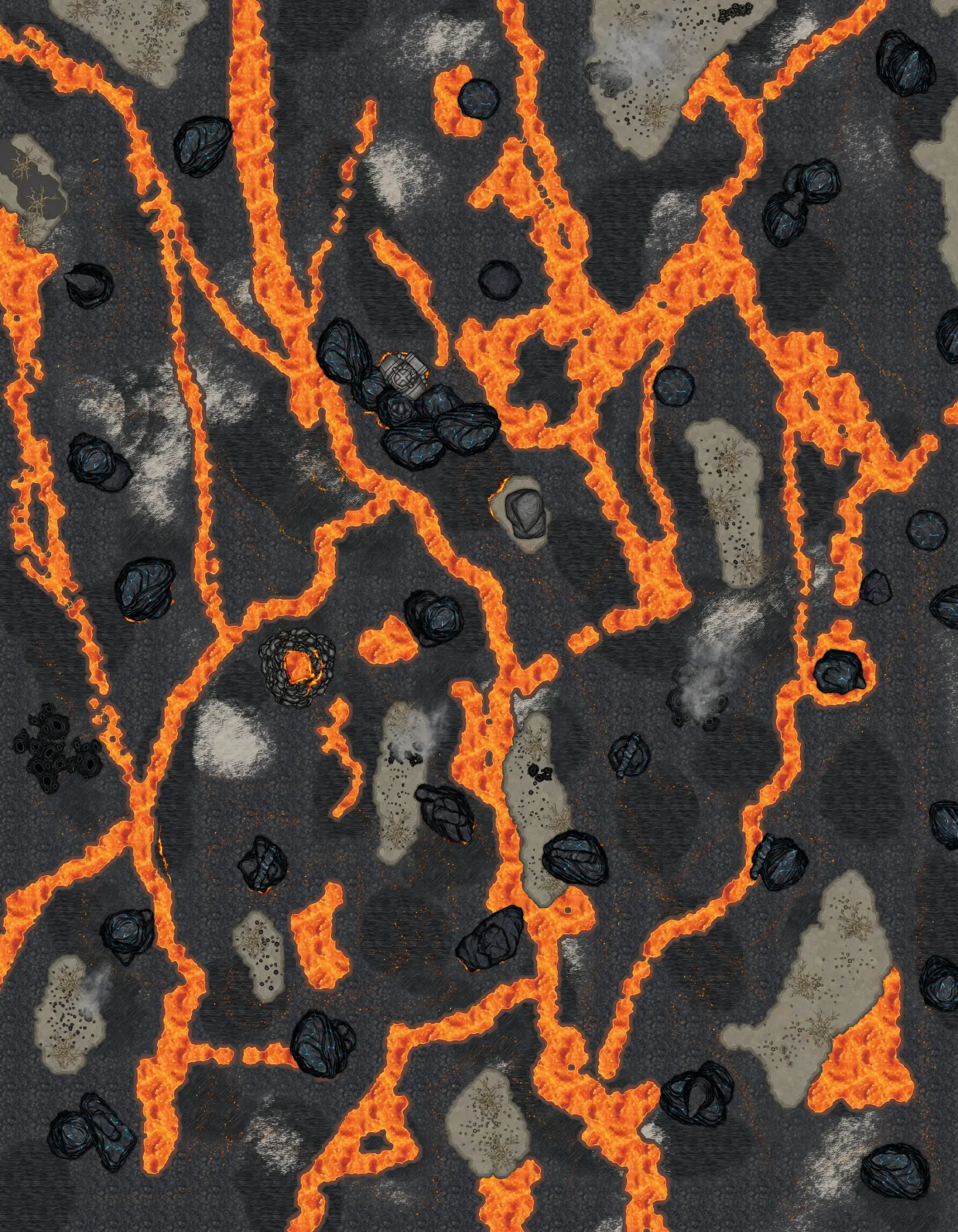
I did find the underwater river map confusing to read and use so I created an alternate map (below) which anyone may use.

Billed as an adventure for levels 3-5 I felt it is most comfortable as a level 4 adventure with level 3 suitable for more experienced players and level 5 for less experiences players. Level 5 in Dungeons and Dragons sees a marked step-up in power level and this adventure doesn’t lend itself to a powerful party, that knows what their characters can do – they may just steam roll through – but this doesn’t preclude them having a fun time.

If you are after a short-light hearted adventure that has a raid style then this is for you. Its a good primer for the adversary group – such as a criminal gang or religious order for a larger campaign, or as gate-way to under dark adventures.

The adventure can be obtained from DriveThurRPG.

Review: So you want to be a Game Master?

0

So you want to be a Game Master by Justin Alexander is a 544 page behemoth aimed at new game masters but also contains many tips and tricks that experienced game masters will find invaluable.

Printed in a larger novel size in black and white with simple grey scale images and drawings this is a book definitely and deliberately designed to teach you how to play and how to design and play different adventure structure types. The book is concise in its writing style and despite it’s large page count it is well written and designed.

For those interested in learning more about the author you can get an ample taste of the authors thoughts and words by visiting The Alexandrian which is a contains a plethora of topics in which you can dig and learn (completing the book).

But what of the book? The broad themes are:

  • Part 1 Dungeons – This is the primer teacher section of the book and well placed at the front. It provide a great start for a person to understand game play structure and their role as the game master. It provides you the tools needed to design a basic adventure flow / structure, concrete dungeon design and faction design tips. This chapter condenses about 50 years of role play gaming knowledge in a compact easy read format.
  • Part 2 Mysteries – This section is focused on how to design an adventure for your players that contains structure with a focus on providing players the opportunity to make a decisions and meaningful choices but within a Gamemaster can plan and respond too. The nice thing about the approach presented is that applied correctly the Gamemaster will be surprised along the way also becoming a player as the table as well as rules adjudicator and facilitator.
  • Part 3 Raid and Heists – This chapter provides a good structure on how to and not run a heist. These are popular in practice but hard to execute – a great aide.
  • Part 4 Urban Adventures – A focused view on how to do an urban campaign. The tools help you focus on what is important and what is not. This is important as the perception is that you need to build a campaign guide for a city when really you do not.
  • Part 5 – Into the Wild – How to run adventures in the wilderness, encounters and environment as well as how to design a point-crawl-campaign.
  • Extra Credits – The largest not labelled part – a 100-page section bringing all you have learnt to create a campaign adventure along with additional tips and tricks to help you to become successful.

The book is very good. You don’t have to read from one end to the other and its certainly able to be used as a reference. In many ways the book brings together 50 years of RPG magazine, podcasts, and game manual advice into one location.

If you are looking for a book that provides detailed structure its a good buy. If you are a more graphical and simpler adventure focus book then Sly Flourish Lazy Return of the Dungeon Master might be for you but with less technical details.

But honestly buy both!

Review: Forge of Foes

0

Forge of Forest is a 5e Kickstarter project by experience 5e designers and editors Mike Shea (Lazy Dungeon Master), Teos Abadia, and Scott Fitzgerald Gray.

For many these authors don’t require introduction, but for those that do:

  • Mike (Michael) Shea – often publishes under the pen name Sly Flourish is a former Wizards of the Coast designer who currently works as a computer programmer and is the brain behind the Lazy Dungeon Master series of Books, and The Lazy RPG podcast. Michael also maintains the Sly Flourish website which contains more than a decade of useful tips and insights into the hobby.
  • Teos Abadi – one of two hosts of the excellent Mastering Dungeons podcast a prolific 5e design and thinker with many design credits. including co-authoring the 5e Wizards of the Coast product Inquisitions Incorporated.
  • Scott Fitzgerald Gray – the name that has been everywhere. Look inside the cover of most 5e, or 4e, books and there is a good chance that Scott will be listed as either the or one of the editors of the book. Scott is also the owner of Insane Angel Studios which publishes under its own name.

Well known RPG names do not automatically make for a good book – though it will often procure an easy sale so what is the purpose of Forge of Foes and who is it for?

At its core Forge of Foes is a book designed to simply help game masters of the Dungeons and Dragons or 5e system understand how to build combat encounters for their players, how to run monsters to provide an interesting game experience and how to simply create or modify monsters to provide an experience that will excite you as a game master and your players.

This will excite those who have tried to build monsters using the information in the 2014 Dungeons Masters Guide (DMG). The 2014 DMG monster building toolkit was not complete and naturally lacked the perspective that only comes with 8+year of experience of running monsters and encounters using the 5e system. The 2024 DMG is expected to improve but it is unlikely surpass the excellently written material contained within Forge of Foes as the page count that can be allowed for this topic will be fewer.

Information is presently sequentially and clearly and where appropriate in table format allowing a Game Master to simply understand what needs to be done and the range in which they can comfortably work or at least be aware when they are proposing to operate outside the bounded accuracy that 5e and Dungeons and Dragons has.

On the whole it is an easy buy recommendation for any Game Master wishing to understand the mechanics of the game or wishes to home brew their own material.

Notably this is a book that you should consider purchasing a printed copy as it is the type of book that you will like open on your desk as you work through your project.

Experience has its plus and these three experienced 5e designer/authors have really provided game masters with an excellent and affordable resource to help build better monsters, better encounters, and better experiences which is what everyone wants at their table.

Bravo!

Review: Dungeons & Dragons – Vecna: Eve of Ruin

0

Vecna: Eve of Ruin is Wizards of the Coasts signature campaign adventure for 50 years of Dungeons and Dragons and is designed to celebrate the many campaign worlds of Dungeons and Dragons. The adventure is written for high level play (player levels 10 to 20) and takes the party for bite sized jaunts through a series of set play adventures before the eventual show down with the Vecna.

A high-level adventure is an unusual offering from Wizards of the Coast as high level play is difficult to design and difficult to run. It’s also outside the core levels of game play with most adventures being 10th level of less with levels 2 to 8 being the most commonly played within.

High level play requires a structured sandbox for player characters to play within as the possibilities given the magical powers the player characters and shenanigans the players can indulge is problematic. Wizards of the Coast has followed this formula closely with the overall story being linear by design. This shouldn’t be construed as a problem or poor design but a design choice necessary as the authors are writing for everyone and not just your game table and game style.

But first who is Vena?

Vecna is an anagram of the author Jack “Vance” whose writing inspired the magical system that underpins the magical system behind basic and 1st edition Dungeon and Dragons. The magical system of Dungeons and Dragons has evolved since then but the the bones of Jack Vance’s “Vancian magic system” are as present as the bones within Vecna himself.

The idea of Vecna has been around since the early days of Dungeons and Dragons but in the form of an artifacts made from the legendary Lich not as a powerful non-player character. Vecna’s rise to prominence as a character occurred much later and most recently found fame from use in Critical Roles campaign 1 as the principal villain and in the Netflix Stranger Things series which (at the time of writing) is yet to be concluded.

Now ascendant as a Lich-God will Vecna rise above all and shape everything to his vision?

Gameplay

The adventure plays out as a series of small campaign walled garden (zones). The characters are co-opted into the adventure through a basic story premise and then assigned a series (7) fetch quests which see them visit various campaign settings and locations visited since 2014 in the various Dungeons and Dragons products. As a homage to ten years of successful Dungeons and Dragons this works well noting that constrained game play is the name of the game for high level campaign adventures. Best to think of it as small “Avengers set-pieces” for the characters to play through until the grand final which is played with a thunderous orchestral theme.

However the overall story is not strong with the Wizards of the Coasts resorting to another “AH-HA gotcha moment” which they used in every adventure they have published in the last few years. The problem is that this falls flat – again – and it doesn’t have any meaningful outcome on the story or game play as the opportunity for the Players to engage with in any meaningful form of the gotcha moment is limited and shallow.

Vecna’s role and influence is also underplayed. As a god with cultists and know-ers of dark secrets surely Vecna or on his countless minions would interplay with the characters during the adventures or perhaps stumble across the PC and interact – but alas no. The adventure largely runs without a time limit which one would think supposed end of the world would require (long-rest anyone)?

No doubt creative Dungeon Masters will come up with a a list of ideas and improvements to be incorporated. Whilst this is certainly part of the hobby (no one can write a book for everyone) it shouldn’t be the first thing a Dungeons Master should be looking for when they crack open the book and give it a first read.

The artwork contained with the adventure continues to be at the industry leading standard but the use of black and white maps grates for those that use virtual table tops for their game play experience. For 2024 and the signature 50th year celebration adventure Wizards of the Coast should have considered a little indulgence and provided both to really treat the community. One assumes that paying for one set of maps is an easy business decision by the organisational bean counters.

In all Vena: Eve of Ruin does provide a homage to 5e Dungeons and Dragons and provides high level play. However it does so at the expense of creatively of a heroic and epic story. This is a shame as this is what high level play should be about. Is the adventure playable – sure! Can it provide a fun experience – absolutely – Will it leave a heroic sense of accomplishment in the players once they finish – probably not – for that elevated personal experience one should be looking at other Wizards of the Coast Adventures such as Curse of Strahd or Storm Kings Thunder.

Review: Dungeons and Dragons – Spelljammer Adventures in Space

0

In 2022 Wizards of the Coast deviated from their traditional single book format to develop a 3-book set with slip cover case for the well revered Spelljammer Dungeons and Dragons setting which was conceived during the second editions of the game. Apart from comprising more cardboard and being more expensive what is it and who is it for?

The Spelljammer campaign is very much in the genre of space fantasy rather than science fiction. The origins align much closer to 1930s action pulp fiction than scientific. More Flash-Gordon or Planet of the Apes than Brave New World, 2001 Space Odyssey or Asimov. A more modern comparison would be strange worlds of Guardians of the Galaxy movies.

Ships are powered by magic with passengers sustainable within bubbles of air, in some places there is air between worlds and others not. Locations can and should be varied and extreme. A planet full of Tarrasques (sure no problems), another populated entirely by sentient pelicans and penguins – sure – pick anything from the Hitcher Hikers Guide to the Galaxy – good to go – just keep an eye out for the Vogon highway construction team.

Oh – in Spelljammer space whales are a thing you will encounter

At its core the Spelljammer box set comprises of 4 products:

  • Astral Adventures Guide – A very slim 64 page guide that provides the briefest of insights into the Spelljammer campaign setting, the guide provides some new space faring character races, very basic space physics, ship plans for space ships modeled after insects and creatures (mosquitoes, squids, sharks, spiders, crabs) as well as conventional sailing ships (galleon, cutter). The booklet rounds out with an overview of a starting point for campaigns – The Rock of Bral.
  • Boo’s Astral Menagerie – A 64-page book which contains lore and monster statistics for a range of weird and wonderful creatures that can be found in the Spelljammer settings.
  • Light of Xaryxis – A short linear adventure designed to bring Players from levels 5 to 8 into the Spelljammer setting.
  • A Spelljammer specific Dungeons Masters screen.

As a package the Spelljammer box set is a little bit of a disappointment not because of the traditional single hard back being broken into 4 pieces but because the lore provided (and it is provided in part in both the adventure and Guide) is insufficient to really help a Dungeon Master understand the intent of Spelljammer and provide the necessary tools and inspiration to really push the setting further.

Space Hamsters are a thing in Spelljammer

The missing component of from the guide book is the element that helped Van Richten’s Guide to Ravenloft really excel as a tool for Dungeons Masters wishing to run a horror game.

In Van Ricthen’s Guide to Ravenloft it was the provision of 44 single paragraph descriptions of Domains or Dread that succinctly outlined a new location and what is happening there. This provided all the necessary inspiration and lore for a Dungeon Master to build upon. 44 Spelljammer equivalent locations would have helped immensely the utility of these books – especially if the monsters not used in the Light of Xyraxis adventure were used to seed these ideas out.

The Light of Xyraxis is a short linear adventure which was designed to be run episodic and in the style of Flash Gordon. The adventure is okay but it is the start of the “Gotcha Ya” moment in the story which also occurs in both the Planescape Adventure and Vecna: Eve of Ruin adventure. The plot line is entirely not needed and any Dungeon Master can easily and quickly address this.

Space Clowns are thing too.

As a campaign setting Spelljammer is potentially fun place but there is just insufficient 5e content provided to really make it sing without the Dungeon Master really investing time to make a story or choosing to purchase from the trove of material that was developed for Spelljammer in previous editions.

For 5e as provided by Wizards of the Coast you really are paying alot for a short simple adventure which is fun to run and play but its a higher price than other adventure alternatives that you can obtain with your cash. If you want it try and purchase as a discount.

The cartography is black and white which is a disappointment for those using virtual tabletops. bit there is a redeeming feature – the art is fantastic.

How Popular is Dungeons and Dragons in your Country Compared to Others? 2024 Update

0

Ever wanted to know how popular Dungeons and Dragons is in your country?

As it happens Google keeps tabs on how popular search terms are by country but how does Google measure popularity? After all popularity is a fairly subjective metric.

Google determines popularity by calculating popularity on scale from 0 to 100, where 100 is the location with the most popularity as a fraction of total searches in that location, a value of 50 indicates a location which is half as popular. A value of 0 indicates a location where there was not enough data for this term (ie. you can assume its not popular).

Note: A higher value means a higher proportion of all queries, not a higher absolute query count. So a tiny country where 80% of the queries are for “bananas” will get twice the score of a giant country where only 40% of the queries are for “bananas”.

Quick Insights from the Data

  • Countries where Dungeons and Dragons was popular has seen a decrease in interest. This includes most English speaking western countries.
  • The success of the Baldur’s Gate 3 video game may have increased interest in Dungeon and Dragons in many countries not seen before.
  • Dungeons and Dragons is most popular in the tiny country of Puerto Rico – we have no idea why – our best guess is that as a small island bound Spanish speaking country they are big fans of adventure beyond the sea and Teos Abadia who is Colombian and not from Puetro Rico but at least speaks Spanish and loves Dungeons and Dragons and would likely tell them to play more role playing games.
  • Dungeons and Dragons is likely in a self-imposed hiatus of community decreased interest (sales) until the 50th edition of the 5e game is released.
Country Dungeons and Dragons popularity 2024 Result 2020 New / Increase / Decrease
Puerto Rico 100 58 Increase
Uruguay 72 New
New Zealand 63 77 Decrease
Canada 63 100 Decrease
Australia 54 75 Decrease
United States 54 97 Decrease
Singapore 45 32 Increase
Hungary 45 24 Increase
United Kingdom 45 64 Decrease
Norway 45 59 Decrease
Thailand 36 New
Italy 36 29 Decrease
Denmark 36 66 Decrease
Czechia 36 24 Increase
Slovakia 27 New
Sweden 27 57 Decrease
Philippines 27 33 Decrease
Spain 27 24 Increase
Greece 27 24 Increase
Netherlands 27 45 Decrease
Germany 18 31 Decrease
Poland 18 New
Nigeria 18 New
Belgium 18 29 Decrease
Brazil 18 20 Decrease
Pakistan 18 New
Malaysia 18 New
Chile 18 16 Increase
Finland 18 36 Decrease
South Africa 18 New
Switzerland 18 20 Decrease
Portugal 18 36 Decrease
Indonesia 18 2 Increase
France 9 5 Increase
Romania 9 19 Decrease
Egypt 9 New
Austria 9 33 Decrease
India 9 3 Increase
Argentina 9 New
Mexico 9 New
Vietnam 9 New
Peru 9 New